The Chicago private drain program, and where it stops
The Chicago private drain program is the City's offer to repair a private drain broken under the public way at no cost to the property owner. It is narrower than it sounds, it is written around a licensed contractor and a permit, and it ends at the city limits.
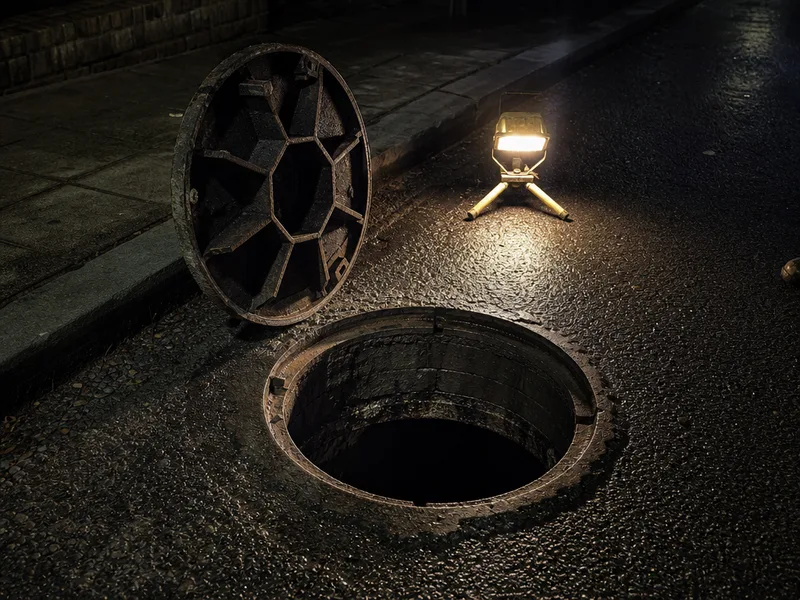
The City of Chicago will repair some broken sewer drains under the street at no cost to the owner of the building they serve. The rule is published, it is short, and almost every five figure quote in this city is written on one side or the other of the boundary it draws.
It is also narrower than people expect, and the narrow parts are where the disappointment happens.
What the private drain program actually covers
The City's own wording is short enough to quote in full, and it is worth reading once slowly rather than in summary:
The City may now repair sewer drain tiles coming from private residences, of up to four units, that are broken under the public way. This is the area from the city sidewalk to the center of the street. Tiles proven to be broken under the public way will be repaired by the City at no cost to the property owner when the following conditions are met: A licensed sewer contractor must be hired to rod and/or make a video inspection of the drain line, and the contractor must schedule a review by a sewer inspector.
Four things in that paragraph do the work. The building has to be a residence of up to four units. The break has to be under the public way. It has to be proven to be there on a recording. And the proof has to come from a contractor licensed to produce it, with a City inspector booked to see it. The Department of Water Management runs the whole thing.
Trenchless sewer repair in Chicago carries a scale diagram of the same boundary, with who pays marked on each zone of the run.
Who pays for sewer line repair in Chicago
Everything from the building to the city sidewalk is private plumbing, and its repair is the owner's bill. That is the answer for the large majority of failures we get asked about, because most of a Chicago lateral sits on the lot rather than under the road.
The reason sits in the City's own words, on its basement flooding page: much of the water that floods basements travels across private property, and the City is not allowed to perform work on private property. It also puts a number on the scale of what it does own, at roughly 4,400 miles of sewer main. So the line the private drain program draws is not an accounting preference that an inspector can be talked out of on the day. It is the edge of what the City is permitted to touch.
That has a practical consequence for anyone reading a quote. A broken sewer pipe repair that runs from the basement wall to the parkway is entirely yours no matter how the program turns out, and the City's involvement can only ever subtract the last stretch from the bill. Anybody presenting the program as a discount on the whole job has misunderstood it, or is hoping you have.
What the program is not
It is not a fund, and there is no application for money. The City repairs its own side of the boundary with its own crews, so the process is built around evidence rather than around receipts. Nothing is reimbursed, so a repair carried out under the public way by your own contractor because it seemed faster is a repair the program has nothing to say about afterwards.
It does not cover maintenance either. The whole thing begins from a defect somebody has already found and put a distance against.
Why the whole thing is written around a licensed contractor
The condition that trips people up is the licensing one, and it makes more sense once you know that Chicago regulates sewer work separately from plumbing work.
A sewer permit from the Department of Buildings is required to construct, alter or repair a private sewer or sewer structure, to rod a public sewer, to videotape one, and to line either a public or a private one. So the two activities the private drain program asks for, rodding and filming, are both permitted acts in this city rather than casual ones.
Those permits are issued only to licensed drainlayers. A drainlayer applicant has to be bonded and insured, and since the start of 2022 a licensed plumbing contractor may obtain a courtesy drainlayer license for the purpose of obtaining sewer permits. Depending on where the work falls and how big it is, the Chicago Department of Transportation or the Metropolitan Water Reclamation District may have to issue permits of their own, and the finished work is inspected by the Department of Water Management.
Read all of that as a description of the law, because that is what it is. None of it describes us. This site brokers introductions and holds neither of those licenses, which is also why the useful thing we can hand you here is the City's own register of licensed plumbing contractors, open to anyone, including for whoever turns up at your door.
The licensing layer matters for one more reason before you book anything. The program does not accept just any video. The permit, the inspector and the recording are a sequence, and a perfectly good inspection carried out outside that sequence is not the one the City will act on. How that sequence runs, and why the footage counter on the recording is the number to write down, is set out on the page about sewer camera inspection.
It stops at the city limits
The program is the City of Chicago's, and it ends where the city does. Every suburb around it answers the same question with its own code, and the answers are not variations on one theme: some draw the owner's responsibility at the curb line, some carry it through the parkway and into the street, and some replace the question with a cost threshold or a trigger at sale. Those five rules are on the suburbs we cover, one page each, because none of them can be summarised as an exception to Chicago's.
What Chicago requires before anyone opens a private drain
The permit layer sits underneath the whole program, and the City publishes all of it. None of these are our rules.
| What | What the City publishes | Published by |
|---|---|---|
| Work that needs a sewer permit | Constructing, altering or repairing a private sewer or sewer structure, rodding a public sewer, videotaping (televising) a public sewer, and lining a public or private sewer | City of Chicago, Sewer Permits |
| Who a sewer permit is issued to | Only licensed drainlayers. Since January 1, 2022, licensed plumbing contractors may obtain a courtesy drainlayer license for the purpose of obtaining sewer permits | City of Chicago, Sewer Permits |
| What a drainlayer has to hold | A permit must be obtained only by a licensed drainlayer, and applicants must be bonded and insured | City of Chicago, Drainlayers License |
| When the permit can follow the work | In-kind replacement of up to 20 feet of an existing sewer, or any amount of rodding of a public sewer, if the licensed drainlayer notifies the Department of Buildings before beginning and pays the fee within 30 days | City of Chicago, Sewer Permits |
| Who else may need to issue a permit | The Chicago Department of Transportation and the Metropolitan Water Reclamation District, depending on the scope and the location of the work. Sewer work is inspected by the Department of Water Management | City of Chicago, Sewer Permits |
| Who runs the private drain program | The Department of Water Management oversees it, and a City sewer inspector reviews the drain the contractor has rodded or videotaped | City of Chicago, Private Drain Repair |
Read the second row as a fact about who may hold a permit, not as a claim about anyone. Nothing in this table describes this site, which brokers introductions and holds neither license. The City keeps its register of licensed plumbing contractors open to the public, so looking up whoever quotes your job takes about a minute.
What homeowners get wrong about the private drain program
- Does the City of Chicago repair sewer lines for free?
One part of one kind of line, on conditions. The City says it may repair sewer drain tiles from private residences of up to four units that are broken under the public way, at no cost to the property owner, once a licensed sewer contractor has rodded or video inspected the drain and scheduled a review by a City sewer inspector. Every other foot of the pipe, from the building out to the sidewalk, is private plumbing and is not covered by anything.
- How does a private drain request get started?
The Department of Water Management oversees the program and its page carries a Get Started Online link, so the City is where the request begins rather than where it ends up. What has to exist before that request means anything is evidence: a drain that has been rodded or filmed by a licensed sewer contractor, and an inspector booked to look at it. The camera run is the part you arrange, and it is the part this site can help with.
- Does the program cover a six-flat or a condo building?
The City's wording is private residences of up to four units, so a six-flat sits outside it on unit count alone. Two-flats and three-flats, which is a great deal of the housing on the older blocks here, sit inside it. If you are not sure how your building is counted, that is a question for the Department of Water Management before a contractor is booked, not after the pipe is open.
- Do I need a permit for a small sewer repair in Chicago?
A permit is needed for the work, but not always before it. The City exempts in-kind replacement of up to 20 feet of an existing sewer, and any amount of rodding of a public sewer, from the wait: the licensed drainlayer notifies the Department of Buildings before starting and pays the permit fee within 30 days. Past 20 feet, or for anything that is not in kind, the permit comes first. That 20 foot line is worth knowing about, because it is one of the reasons two quotes for what sounds like the same job can be organized so differently.
- Can any plumber pull the sewer permit?
No. Chicago issues sewer permits only to licensed drainlayers, and a drainlayer has to be bonded and insured to hold that license. Since the start of 2022 a licensed plumbing contractor can obtain a courtesy drainlayer license for the purpose of getting sewer permits, which widened the field without changing the rule. It is worth asking whoever quotes your work which license the permit will be pulled under.
- The drain is backing up now. What is the right first move?
Get the line rodded or filmed by a contractor who can pull the permit, and keep the recording. Where the defect sits along the run decides whether the bill is yours or the City's, and no method can be picked honestly before that is known. Ask here and the address goes out to a sewer contractor covering that part of the city, with the estimate coming back in writing from them. This site brokers the introduction and nothing beyond it, which is why every figure on the page above belongs to somebody we have named.
Find out which side of the sidewalk your break is on
That answer decides whether the last stretch is a City job or yours, and only a recording with the footage counter running settles it. Tell us the address and how the drain is behaving, and the camera run is what gets arranged.
Free, written, and no obligation. We answer requests the same day.