Trenchless sewer repair in Berwyn, IL
Berwyn added a sewer ordinance in 2025 that no neighboring suburb has: video of the entire lateral, building to main, before the Building Department issues a certificate of compliance on an investment property at transfer. Trenchless sewer repair in Berwyn is now something a sale can wait on, which changes when it is worth doing.
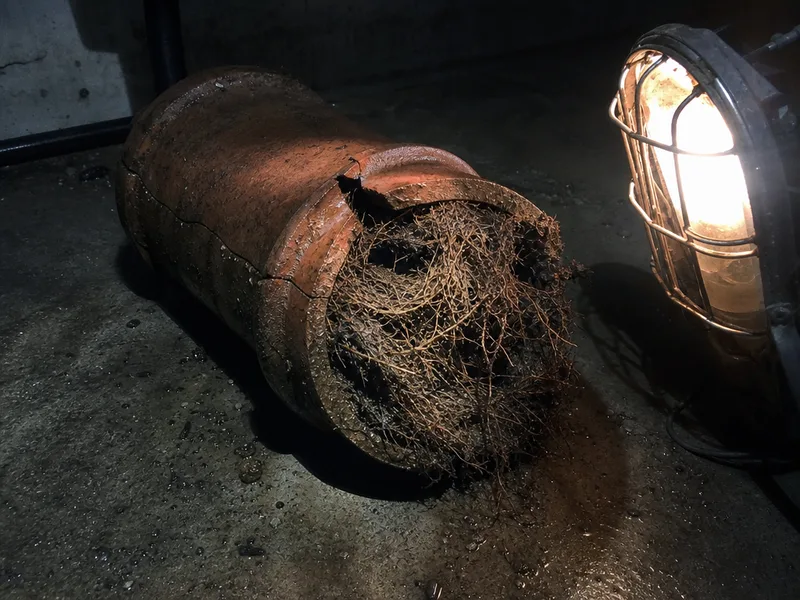
In August 2025 Berwyn did something none of the other suburbs on this site has done. It put the sewer lateral into the property transfer process, on video, for the whole length of the pipe.
Section 1042.047 of the City code, added by Ordinance 25-16, says that before the Building Department issues a certificate of compliance for any investment property at the time of transfer, the owner or authorised agent has to provide video recordings of the sewer lateral service lines serving the property, and submit them for review as part of the transfer inspection.
That is a genuine change in how a sale works here, and it has not filtered through to everyone who is about to be affected by it.
What the ordinance actually asks for
Three conditions sit inside the section, and each one rules out a shortcut.
The entire lateral sewer line from the building to the connection at the public sewer main has to be recorded. Not the accessible part, not up to the property line. The recordings have to be in a digital format the Building Department approves and of sufficient quality to allow visual inspection and evaluation, which rules out a phone video of a monitor. And a licensed plumber or approved contractor has to perform the inspection and provide a written summary of findings along with the files.
The consequence is stated too. Failure to provide the materials may result in the denial or delay of the certificate of compliance, and no real estate transfer is deemed complete until the requirements are fulfilled and reviewed to the Building Department's satisfaction.
Who it applies to, and who it does not
The ordinance defines investment property inside the same section, and the definition matters more here than in most towns. It covers a residential structure that is not owner-occupied, including anything leased or intended to be leased. It covers a property bought to renovate and resell. And it covers an owner-occupied building that contains one or more additional dwelling units, such as a two-flat, a three-flat or a garden apartment, which are leased or available to lease.
Berwyn has a lot of that third category. The National Register nomination for the Central Berwyn Bungalow Historic District counts 105 two-flat homes inside that district alone. An owner living in the lower unit of a two-flat and renting the upper one is inside this ordinance, and would not necessarily assume so.
An ordinary owner-occupied single-family sale is outside section 1042.047. That is worth stating clearly, because the opposite claim is an easy way to sell an inspection to somebody who does not need one yet.
Why the ordinance points at the same thing this trade points at
Whatever prompted it, the effect of 1042.047 is that a Berwyn lateral now has to be looked at rather than assumed about. That is the same sequence every job on this site starts with, and the reason is not regulatory. It is that four readings decide the repair, and only a camera produces them: what the pipe is made of, whether it still holds a round shape, whether it has settled anywhere, and how far along the defect sits.
Book the sewer camera inspection knowing which version you need. A recording made to satisfy the Building Department has to cover the full run to the main and arrive with a written summary. Say that when you book it rather than afterwards, because a shorter run may be a perfectly good diagnostic and still not be the document the transfer needs.
Bungalow blocks, clay pipe and the alley
Berwyn's housing is unusually uniform and unusually well documented. The National Register nomination for the central bungalow district records 1,507 principal buildings, of which 1,358 contribute to the district. Single-family bungalows account for 1,265 of them, and 1,109 of those are masonry Chicago bungalows. The period of significance runs from 1900 to 1949, and the nomination describes the district as largely built between the 1910s and the 1940s with the boom in the 1920s.
That gives a contractor a fairly reliable expectation before anyone arrives. Under a 1920s brick bungalow the run to the street is normally vitrified clay in short jointed sections. Clay does not corrode, so it fails at its seams, and the seams are what roots exploit.
The nomination also notes two things about the ground above the pipe. Garages sit at the rear of the lot facing the alley, and the district's streets are not more than forty feet wide. Narrow streets and alley access change the practical question of how a machine reaches a line, which is one of the reasons methods that work from small pits rather than a continuous trench suit these blocks.
The parkway tree, and the ordinance written around it
Root damage is common enough here that the City has its own rule for the tree rather than only for the pipe. Section 1030.02 allows a line tree in a parkway to be removed and a new one planted by the city where its roots have caused substantial damage and the line is unable to be in service. Two conditions come with it: the Director of Public Works has to certify the tree and the root obstruction first, and a line tree may only be removed after every possible root remedy has been reasonably applied. The cost is divided equally between the owner and the city.
Both conditions turn on evidence, which brings the answer back to the video again. Certifying a root obstruction is easier when somebody can point at it on a recording with a footage reading beside it.
Section 1030.03 is the companion most homeowners meet first. Routine maintenance and rodding of the line is the owner's sole obligation, and where Public Works rods a line after a backup, the owner is solely responsible for the cost of that rodding. Repeat rodding on one line is money spent moving a blockage rather than removing the reason it keeps forming, and after the second visit it is usually cheaper to find out why.
Where this leaves a Berwyn repair
Two things then decide the work, and on these blocks they pull in the same direction. The first is what the recording shows. The second is access, because a forty-foot street with parked cars on both sides and a garage at the alley end of the lot leaves very little room to run a trench along the whole line. Sewer pipe lining needs the least of that room, since the liner goes in through a cleanout. Pipe bursting needs a pit at each end and no trench between them. Sewer line repair on one failed section is still the cheapest answer where the rest of the run has held up, and it is worth asking for by name rather than accepting a quote for the whole length. The services page sets the four side by side.
There is also a clock on this in a way there is not elsewhere. If the recording is going to the Building Department as part of a transfer, the repair decision lands in the middle of a sale, which is the worst time to be choosing between methods for the first time.
Berwyn sits directly south of Oak Park across Roosevelt Road, and the two have different rules on the same block-and-alley street pattern, which is a good illustration of why municipal boundaries matter more than distance here. The broader picture across the city and the near suburbs is on the page about trenchless sewer repair in Chicago.
The two Berwyn ordinances that decide a sewer job here
One of these was passed in 2025 and most people have not heard about it yet.
| Rule | What the City code says | Published by |
|---|---|---|
| Video before a transfer, on investment property | Prior to issuance of a Certificate of Compliance for any investment property at the time of transfer, the owner or authorized agent shall provide video recordings of the sewer lateral service lines serving the property, submitted to the Building Department as part of the transfer inspection process | Berwyn Code 1042.047, Ord. 25-16 (2025) |
| How much of the line has to be on the recording | The entire lateral sewer line from the building to the connection at the public sewer main shall be recorded, in an approved digital format of sufficient quality to allow visual inspection and evaluation | Berwyn Code 1042.047 |
| Who may record it, and what comes with it | A licensed plumber or approved contractor must perform the inspection and shall provide a written summary of findings along with the video files | Berwyn Code 1042.047 |
| What happens without it | Failure to provide the required video inspection materials may result in the denial or delay of the Certificate of Compliance, and no real estate transfer shall be deemed complete until the requirements are fulfilled and reviewed | Berwyn Code 1042.047 |
| When a parkway tree is the cause | Where a parkway tree and its roots cause substantial damage and the line is unable to be in service, a line tree may be removed and replaced by the city, only after the Director of Public Works certifies the tree and root obstruction and after every possible root remedy has been reasonably applied, with the cost divided equally between the owner and the city | Berwyn Code 1030.02 |
| Who pays for rodding, including rodding done by the City | Routine maintenance and rodding of a sewer line connecting to a municipal service junction is the sole obligation of the owner, and where Public Works rods a line after a backup the owner is solely responsible for the cost | Berwyn Code 1030.03 |
Investment property is defined inside 1042.047 itself: a residential structure that is not owner-occupied, or is bought to renovate and resell, or is owner-occupied but contains additional units such as two-flats, three-flats or garden apartments that are leased or available to lease. An owner-occupied single-family sale is outside it.
What Berwyn owners and buyers ask about the lateral
- Does Berwyn require a sewer camera inspection before I sell my house?
Only for what the ordinance calls an investment property, and it defines the term itself. That covers a home that is not owner-occupied, one bought to renovate and resell, and an owner-occupied building that also contains leased units such as a two-flat, a three-flat or a garden apartment. For those, section 1042.047 requires video of the sewer lateral to be submitted to the Building Department before a certificate of compliance is issued at transfer. A straightforward owner-occupied single-family sale is not covered by that section.
- How much of the pipe has to be on the video?
All of it. The ordinance says the entire lateral sewer line from the building to the connection at the public sewer main must be recorded, in a digital format the Building Department approves, and of sufficient quality to allow visual inspection and evaluation. It also requires that a licensed plumber or approved contractor perform the inspection and supply a written summary of findings with the files. A partial run that stops at the property line does not meet it.
- What happens if the video shows a break?
You find out before a closing date depends on it, which is the useful part. What the recording gives you is a defect with a footage reading attached, and that is what decides the repair. A cracked but round pipe is normally a lining job. A collapsed or oval one is a bursting job. One bad hub in a sound run is a single section of repair. Nothing in the ordinance requires the pipe to be perfect, but it does mean the condition is now on the record.
- A parkway tree wrecked my line. Will the City take the tree out?
There is an ordinance for exactly this and it is narrower than people expect. Section 1030.02 allows a line tree to be removed and replaced by the city where its roots cause substantial damage and the line is unable to be in service. Before anything happens, the Director of Public Works has to certify the tree and the root obstruction, and the section says a line tree may only be removed after every possible root remedy has been reasonably applied. The cost of the removal, the replacement tree and the planting is divided equally between the owner and the city.
- The City rodded my sewer. Why did I get a bill?
Because the code says so. Section 1030.03 makes normal maintenance and rodding of the line connecting to a municipal service junction the sole obligation of the owner, and where the Department of Public Works rods a line after a backup the owner is solely responsible for the cost of that rodding. It is worth knowing before the second or third callout, because repeat rodding on the same line is usually paying to move a blockage rather than to fix the reason it forms.
- Why are so many Berwyn sewer problems the same age?
Because so much of the housing is. The National Register nomination for the Central Berwyn Bungalow Historic District records 1,507 principal buildings in the district, of which 1,358 contribute, with 1,265 of them single-family bungalows and 1,109 of those masonry Chicago bungalows. Its period of significance runs from 1900 to 1949 and it describes the district as largely constructed between the 1910s and the 1940s, with the boom in the 1920s. Laterals laid under a 1920s bungalow are jointed clay, and jointed clay a century old is what a root finds first.
Get the lateral on video before it holds up a closing
The recording the Building Department wants covers the whole line to the main and comes with a written summary. Send the address and what the drain has been doing, and that is the visit that gets booked.
Free, written, and no obligation. We answer requests the same day.