Trenchless sewer repair in Skokie, IL
Skokie homeowners own the sewer lateral outright, and the Village says so in plain words. What Skokie adds that no neighboring suburb does is a narrow assistance program that only opens above $7,500, and only where the main is deep and under a wide street. Trenchless sewer repair in Skokie is often the answer to that same geometry.
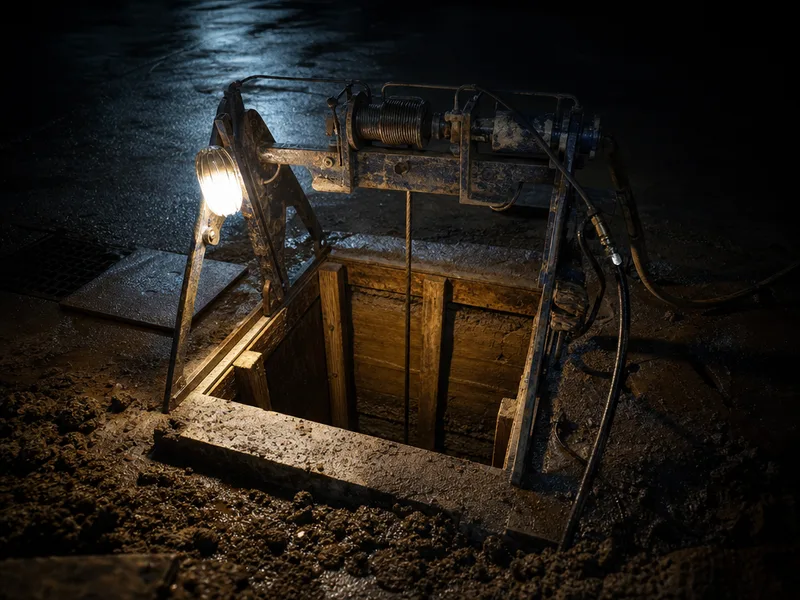
Skokie is direct about the sewer lateral in a way that saves everyone an argument. The Village writes that the line connecting your home to the public sewer is a private line, that it belongs to you and not the Village, and that keeping it in good working order is your responsibility. There is no boundary clause, no curb-line exception and no municipal repair program underneath it.
What Skokie does have, and what none of the neighboring suburbs on this site publishes, is a narrow assistance program with five conditions attached. Read carefully, those conditions describe a specific kind of Skokie address, and they happen to describe the exact case where trenchless methods earn their keep.
The five conditions, and what they are really describing
To qualify, all of the following have to be true at once. The home is a single-family residence. Its sewer connects to a main in the public right-of-way of a Regional Arterial, Village Arterial or Collector street that is at least 42 feet wide. The problem has created a clear hazard in the public way. The main at the point of connection is at least 12 feet deep. And the total cost of the repair is more than $7,500, which the Village describes as higher than a typical Skokie sewer repair. Where all five hold, the Village may assist with costs above that figure.
Strip out the administrative language and the program is about two physical things: how deep the connection is, and how wide the road above it is. Those are the two variables that decide whether reaching a defect is an afternoon or a week.
A connection twelve feet down under a forty-two-foot arterial cannot be reached with a small trench. It needs shoring, a large excavation, traffic control and full pavement restoration, and that is before the pipe itself is touched. The Village is effectively saying that when your address has that geometry, the normal cost of a sewer repair stops being a useful benchmark.
Why depth is a trenchless argument rather than a trenchless advertisement
The methods this site describes all avoid one thing: continuous trench along the line. That is not automatically valuable. On a shallow line under a lawn, a dig can be the sensible answer, and any contractor who tells you otherwise is selling a technique rather than solving a problem.
Depth is where the balance shifts hard. Pipe bursting works from a pit at each end and pulls a new pipe along the path of the old one, so a twelve-foot connection needs one deep pit rather than a deep trench the whole way. Sewer pipe lining usually needs no pit at the far end at all, since the liner is fed in from a cleanout and cured in place. Where the defect is one failed section in an otherwise sound run, sewer line repair on that section is still the cheapest honest answer, and the whole comparison sits on the services page.
None of these fixes a pipe that has settled into a low spot, because both trenchless methods follow the alignment that is already in the ground. If the video shows water standing in one place on an otherwise clear line, that is a grade problem and it needs a different conversation.
The Village has filmed its own sewers. Yours is the gap.
Skokie says it has inspected its entire public sewer system using video technology, that an independent engineering firm reviewed the footage and rated the condition of every public sewer from worst to best, and that the Village used that review to build a 20-year master plan targeting the worst-rated sewers first.
That is a good answer to the question of whether the public main under your street is sound, and it says nothing at all about the pipe between your building and it. The lateral was not in that survey. It is the one section of the whole chain that nobody has looked at, which is why a sewer camera inspection is the first thing worth spending money on here rather than the last.
It also gives you a way to check your own suspicion. If the Village finds nothing wrong in the public sewer when it comes out on a backup, the problem is in the pipe it does not own, and you now know which pipe to film.
A town built in ten years, and what that means underground
Skokie's Comprehensive Plan appendix, adopted by the Village Board in 2003, carries a population table going back to 1900. It records 763 residents in 1920, 5,007 in 1930, 7,172 in 1940, then 14,832 in 1950 and 59,364 in 1960. The table gives that last jump as an increase of 300.2 percent in a single decade.
For a sewer contractor that table is a materials list. A community that quadrupled in the 1950s put nearly all of its private laterals in the ground in the same few years, under the same codes, using the same products, and those laterals are now around seventy years old together. That is a different problem from the one in Oak Park, where much of the housing predates 1900 and the pipe under it is older jointed clay, and it is different again from the one in Berwyn, whose bungalow blocks went up in the 1920s.
It also means neighbors here are usually not exaggerating. When several houses on one Skokie block have had sewer work in the same handful of years, that is what a single-decade housing stock reaching the end of a service life looks like, rather than a run of bad luck.
Where the Village stops, and what to ask instead
Skokie will check the public sewer, and it will hand you a list of contractors who have worked locally while saying explicitly that it cannot recommend any of them. That is a reasonable position for a village to take and it leaves you doing the choosing.
The Village's page on private warranty programs is worth reading before you sign anything, because it lists the questions that decide whether a policy is worth having: whether the cover extends into the public right-of-way or under the street, whether restoration of sidewalk, landscaping and pavement is included, whether a partly blocked line counts or only a total failure, whether rodding is paid for, what pre-existing conditions disqualify a line, and who picks the contractor.
Every one of those questions is easier to answer once the line has been filmed, which is the same order of operations the rest of this site recommends. The general case for it, across the city and the suburbs, is on the page about trenchless sewer repair in Chicago.
The five conditions Skokie attaches to sewer assistance
All five conditions have to be met. The Village lists them together and does not treat them as guidance.
| Condition | What the Village requires | Published by |
|---|---|---|
| Type of home | The home is a single-family residence | Village of Skokie, Sewer |
| Which street the main is under | The property's sewer connects to a main line located in the public right-of-way of a Regional Arterial, Village Arterial, or Collector street that is at least 42 feet wide | Village of Skokie, Sewer |
| What the problem has caused | The sewer problem has created a clear hazard in the public way | Village of Skokie, Sewer |
| How deep the connection is | The main sewer line at the point of connection is at least 12 feet deep | Village of Skokie, Sewer |
| What the repair costs | The total cost of the repair is more than $7,500, which the Village describes as higher than the typical cost of a sewer repair in Skokie. Assistance covers costs above that figure | Village of Skokie, Sewer |
The $7,500 in the last row is a program threshold, not a price and not a quote. It is the Village's own description of where an unusually expensive Skokie repair starts, and this site publishes no price of its own anywhere.
Sewer lateral questions people ask in Skokie
- Does the Village of Skokie fix private sewer laterals?
No. The Village puts it plainly: the sewer lateral is a private line that belongs to you, not the Village, and keeping it in working order is your responsibility. What the Village will do on a backup is check the public sewer in the street first, which is worth doing because it is free and it rules out the half you do not own. If nothing is found there, the Village says you will need a licensed plumber to check the private lateral.
- What is the Skokie sewer assistance program, and would I qualify?
It is a narrow program for homes that face unusually high repair costs because of where they sit. Five conditions all have to be met: a single-family residence, a connection to a main in the right-of-way of a Regional Arterial, Village Arterial or Collector street at least 42 feet wide, a problem that has created a clear hazard in the public way, a main at least 12 feet deep at the point of connection, and a total repair cost over $7,500. Where all five apply, the Village may help with costs above $7,500. Most addresses will not meet all five, and the ones that do tend to be exactly the ones where digging is worst.
- Why does a 12-foot-deep main change what the repair should be?
Because depth is what turns a trench into a project. An open cut to a connection twelve feet down under a wide arterial means sheeting and shoring, a much larger spoil pile, lane closures and full pavement restoration. That is the case where reaching the same pipe from a small pit at each end is worth the most, which is what pipe bursting and lining are for. It is also the case where the Village's own assistance threshold is most likely to be crossed, and those two facts are not a coincidence.
- Skokie has already inspected its sewers. Does that cover mine?
It does not, and the distinction is useful. The Village says it has inspected its entire public sewer system using video, had an independent engineering firm rate the condition of all of those sewers from worst to best, and built a 20-year master plan to repair the worst first. That is the public system. The lateral from your building to it was not part of that survey, so the only way to know its condition is to put a camera in it.
- Should I buy a sewer line warranty?
The Village stays neutral on this and publishes a list of questions to ask before signing, which is more useful than an opinion. It asks whether the warranty covers problems in the public right-of-way or under the street, whether it pays to restore sidewalks, landscaping or pavement after a dig, whether a partly blocked but still working line is covered or only a complete failure, whether rodding is included, what pre-existing conditions void it, and who chooses the contractor. It also notes that most homeowners insurance does not cover lateral repairs, treating them as maintenance.
- How old is the pipe under a typical Skokie house?
Most of it went in during one decade. The Village's own Comprehensive Plan appendix records a population of 14,832 in 1950 and 59,364 in 1960, an increase the table itself gives as 300.2 percent. A town that quadruples in ten years is a town whose laterals were nearly all laid in that same period, which puts much of Skokie's private sewer stock at roughly seventy years old and in the materials of that era rather than in the older clay you find closer to the city.
Find out how deep your connection is before you choose a method
Depth and street width are what make a Skokie repair expensive, and both are knowable before anyone quotes. Send the address and what the drain has been doing.
Free, written, and no obligation. We answer requests the same day.